
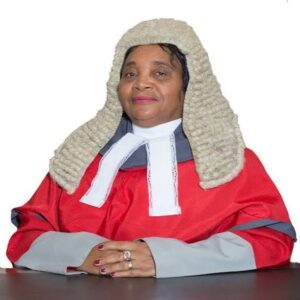
HARARE – President Emmerson Mnangagwa has appointed Justice Elizabeth Gwaunza as the new Chief Justice of Zimbabwe and Justice Paddington Garwe as Deputy Chief Justice with effect from May 15, 2026.
This comes following the stepping down of the Chief Justice Malaba who stepped down after reaching the mandatory retirement age of 75, marking the end of a defining chapter in Zimbabwe’s judiciary.
Malaba’s retirement is in line with Section 186(1) of the Constitution of Zimbabwe, which requires judges to leave office upon attaining the age of 75 unless their term is extended under special provisions.
Malaba served as Chief Justice since 2017, presided over some of the country’s most politically sensitive and high-profile cases, with his judgments often attracting both praise and criticism from across the political divide.
The appointments were announced in separate press statements issued this Thursday by Chief Secretary to the President and Cabinet, Dr Martin Rushwaya.
“His Excellency, the President, has, in terms of section 180 (2) of the Constitution of Zimbabwe, appointed Honourable Mrs Justice Elizabeth Gwaunza as the Chief Justice of the Republic of Zimbabwe with effect from 15 May 2026,” he said.
Justice Gwaunza takes over as Chief Justice after serving as Deputy Chief Justice since March 29, 2018. Government said she possesses extensive judicial experience and is qualified for the position.
She becomes one of the few women to hold the highest judicial office in Zimbabwe, marking another milestone in the country’s legal and judicial leadership.
Justice Garwe, who has been serving as a judge of the Constitutional Court since May 20, 2021, was appointed Deputy Chief Justice.
“His Excellency, the President, has, in terms of section 180 (2) of the Constitution of Zimbabwe, appointed Honourable Mr Justice Paddington Garwe as the Deputy Chief Justice of the Republic of Zimbabwe with effect from 15 May 2026,” he said.
The appointments come at a time for Zimbabwe’s judiciary as the country continues to implement judicial reforms and strengthen constitutional governance.


Add comment