
As technology continues to evolve, the Zimbabwe Miners Federation (ZMF) has announced plans to launch the Women in Tech Mining initiative in the third quarter of this year, aimed at empowering women with digital skills in the mining sector.
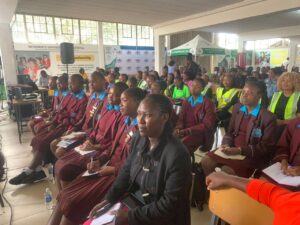
Speaking during the Hope/Fay Public Lecture Series on Women and the Mining Sector, held to commemorate International Women’s Month at Women’s University in Africa Harare Campus this Tuesday, ZMF President Henrietta Rushwaya said the initiative responds to the growing need for technological advancement in mining, citing that the future of the sector is increasingly digital.
“During the third quarter of this year, we will be launching ZMF Women in Tech Mining. This is an initiative to train young women in drone surveys, geological analysis, and sustainable mining techniques,” she said.
Mining in Zimbabwe was previously largely traditional, manual, and labour-intensive before the introduction of modern technology began transforming the sector.
She also emphasized the role of women in mining, noting ongoing efforts to break the glass ceiling and increase women’s ownership of mining claims.
“We moved away from the notion that women in mining were mainly helpers. We launched awareness campaigns to ensure that women understand that they have constitutional rights to own mining claims, register their own entities, and operate as primary producers,” she said.
According to statistics from the Centre for Natural Resources Governance (CNRG), the extractive sector in Zimbabwe remains predominantly male, with women making up less than 15% of the workforce in large-scale mining operations, where they are mostly concentrated in administrative and support roles.
Zimbabwe School of Mines representative Ms Sibanda emphasized the need to recognize women in the mining sector, stating that women must not only be seen and heard but must fully enjoy their rights.
“As we reflect on the International Women’s Day message, ‘Give to Gain,’ we are challenged to think differently about transformation. Meaningful progress in mining requires all of us to give something ,our commitment and willingness to change systems that have historically excluded women,” she said.
Ms Sibanda added that women and girls must be recognized as equal partners and decision-makers in the mining sector, stressing the importance of collaboration.
“If we are committed to transformation, we must build genuine partnerships among government, training institutions, mining companies, civil society, and development partners. These partnerships must go beyond statements of support and move toward practical solutions that prioritize inclusion and economic equity for women,” she said.
Traditionally, Zimbabwe’s mining sector has been shaped by patriarchal structures and systemic barriers that have limited women’s access to mining claims, financing, technical skills, and leadership opportunities. As a result, women have often been pushed into informal and peripheral roles such as mineral processing, trading, and support work, rather than being recognized as equal owners or decision-makers.
National Director of Women Empowerment in Mining Zimbabwe, Dr Chiedza Chipangura, commended women in mining and urged them to complement rather than compete with one another.
“Do not compete with anyone; you are your own woman. We don’t compete, we complement each other. The mining sector is a very difficult environment,” she said.


Add comment